
Snacks & ingredients
Why Thekua is the Original Indian Energy Bar
Mom's Tokri · · 5 min read
Whole-wheat atta, jaggery, desi ghee, fennel and coconut — thekua has one of the shortest labels on any tea-time snack. Why this Bihari classic works like an energy bar, and how much of it to eat.
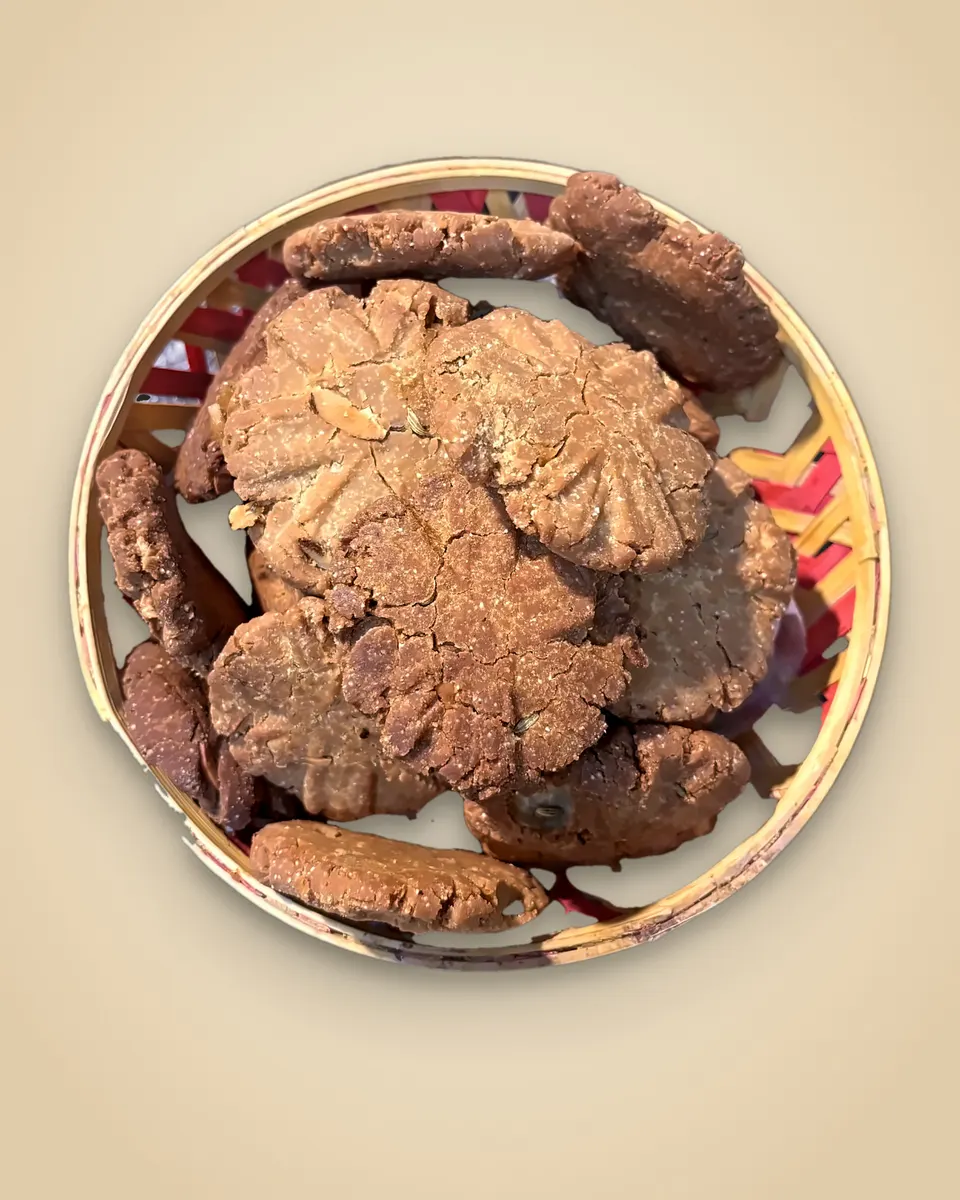
Take away the wrapper and the marketing and an energy bar is a simple idea: a handheld portion of food that carries you to the next meal. Long before that idea had a name, Bihari kitchens were already making it — atta, gur, ghee, fennel and coconut, pressed in a wooden saancha and fried slow till crisp. At Mom's Tokri we make it by hand in Bengaluru, and this is an honest look at why the comparison holds, and where it stops.
What an energy bar actually has to do
A snack that carries you to the next meal needs two things: carbohydrate you can burn quickly, and enough fat and fibre that the energy does not vanish in twenty minutes. Packaged bars chase that balance with oats, dates, nuts and syrup, then add a long ingredient list to hold it all together.
Thekua arrives at the same answer with a handful of kitchen ingredients. Whole-wheat atta brings carbohydrate and naturally occurring fibre. Jaggery gives the quick sweetness. Desi ghee and coconut carry the fat that makes it satisfying, and fennel adds aroma. Nothing in that list is there to extend shelf life.
A label you can read in one breath
Our Classic Gur Thekua is made with whole-wheat atta (whole wheat flour), jaggery, ghee, coconut and saunf (fennel), with a little green cardamom for fragrance, then fried in oil. Kaju-Badam Gur Thekua adds cashew and almond to the same base.
There are no added preservatives, and every ingredient in that list is there to make the thekua, not to keep it on a shelf. That is not a health claim on its own — it simply means you can decide what you are eating in a few seconds, which is the same test most people apply to a packaged bar before they buy it.
Where the energy comes from
This is where the comparison is most honest. The gur thekua sample tested by Prewel Labs (NABL Accredited), report FD/0568, recorded 549.69 kcal, 49.44 g carbohydrate, 6.15 g protein and 3.73 g dietary fibre per 100 g, along with 36.37 g total fat and 11.35 g total sugars.
So thekua is genuinely energy-dense — which is exactly what an energy bar is meant to be, and also why the portion matters. It is not a low-fat or low-calorie food and should not be treated as one. The difference is that the energy here comes from ingredients you can name.
Why it earns its place at tea time
Four or five in the afternoon is when a snack has to work: something that takes the edge off hunger without ruining dinner. The fibre in whole-wheat atta and the fat in ghee and coconut make thekua a slower, more satisfying snack than one made mostly of refined flour and sugar.
Fennel is the quiet reason it feels easy to eat. It is the same reason saunf finishes a Bihari meal — a sweet, anise-scented note that cuts through richness. With a cup of chai, one or two pieces is a proper tea-time snack rather than a sweet run.
No preservatives, and what that costs you
Because we add no preservatives, thekua cannot sit in a cupboard for months. We make it in small batches, and the best-before period is 21 days from the packing date printed on the pouch. Keep it in a cool, dry place and reseal the pouch after opening; no fridge needed.
That short shelf life is the trade you make for a clean label. A snack that stays soft for a year is doing something your kitchen cannot. Treat thekua like fresh food: order it when you want it, and finish the pouch while it is still crisp.
Eat it like a bar, not a bowl
One or two pieces is the portion that behaves like an energy bar — enough, with unsweetened chai, to carry you through the evening. A 250 g or 500 g pouch is a pack size, not a serving suggestion, and eating straight from the pouch is how a mindful snack turns into a second meal.
If you are watching sugar or blood glucose, remember that jaggery is still sugar: that same lab report recorded 10.26 g added sugars per 100 g. Ask your clinician or dietitian how sweet snacks fit your own needs.
Made by hand at Mom's Tokri
At Mom's Tokri in JP Nagar 8th Phase, Bengaluru, the dough is mixed by hand, pressed in a wooden saancha and fried slowly in small batches — the same method Maa uses at home. Every order is confirmed with you personally on WhatsApp before we make it.
We deliver across our South Bengaluru pincodes and take bulk and festival orders, including Chhath thekua. Choose Kaju-Badam Gur Thekua if you want cashew and almond in every piece, or Classic Gur Thekua for the original five-ingredient recipe.
The takeaway
Thekua does not need rebranding to earn the comparison. It is a handmade, preservative-free snack built from a few honest ingredients, and it has been doing the energy-bar job in Indian kitchens for generations. Eat it the way you would a bar — a small portion, slowly, with chai — and the rest of your day keeps its balance.
Sources & nutrition note
Ingredient list: Mom's Tokri catalogue. Nutrition figures: owner-supplied Prewel Labs (NABL Accredited) report FD/0568 for gur thekua; handmade batches and recipes can vary. This article is general food information, not personalised medical or dietary advice.